Showing posts with label Rwanda. Show all posts

"Mac in Action" in Rwanda

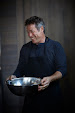
Here we are, folks! Here's the video I promised of the ad hoc process of making Mac & Cheese in Rwanda. It wasn't easy and there were a couple points when I thought it wasn't going to turn out, but everyone seemed pretty happy with the result. It made me really happy to honor the rest of the crew by making a meal for them.

Enjoy!

Beecher's Mac Africa and Cheese

On our last day in Rwanda I got the big treat of making lunch for the 50 man crew working to build the St Ignatious school.  When we were working there we really enjoyed the workers. It was classic mime communication as of course we knew no Kinyarwandan and only a few of them knew even a little English. Despite the language barrier we grew to really appreciate them and the hard work they performed for $1.50 per day.

Beecher's Mac and Cheese and Maximus/Minimus braised pork was the menu.  Rwandans really only eat rice and beans so many of the workers had never tasted pasta.  They were very curious as I showed up and packed my supplies into the fire shed where the lunch cooking is done.  Word spread that the Americans were here to cook.  The two ladies who did the cooking were quite helpful in teaching me, again pretty much just with mime, how to cook on an open fire on a dirt floor in a shed with no chimney. 

In the end it was actually a reasonable facsimile of the real Beecher's Mac. There were certainly many times during the process that the outcome was in doubt, but they all loved the finished product and the plates were clean.

At one point the fellow with the best English asked me how much this meal would cost in America.  A mix of appreciation for our western situation and shame arose in me as I realized that it would be over a week of wages simply for him to buy this meal that I had prepared.

Stay tuned for a video of the Mac & Cheese making process!

Also, if you haven't gotten a chance to the other posts, just click on the rwanda tag below to display all of them.

Genocide

Geno, or race, combined with Cide, Or killing.  The term was coined in 1954 to categorize mass killings based on ethnicity. It was in response to the holocaust  in Germany which killed over 6 million but has been applied to several tragedies in the last century.  

The 1994 genocide is always just below the surface when you are in Rwanda. Visibly, there are memorials all throughout the country where the dead in that area have been reburied.   Less visibly though is that the racial hatred that caused it in the first place is not gone.  How could it be?  Less than a generation ago the 80 percent majority Hutus killed almost a million of the minority Tutsis.  And did so mostly in really brutal machete attacks on men, women and children right in the open.  They were earnestly trying to exterminate the Tutsis.  The only thing that stopped the killing was the Tutsi rebel army which invaded. 

Today the country is trying very hard to overcome the tragedy and the hatred that spawned it.  The government is officially mixed.   A very large number of genocidaires have been brought to justice in war crimes trials. And no one, Tutsi or Hutu that we met openly talked of anything other than that the only option was forgiveness. 

Gashora Girls Academy


My first exposure to Rwanda beyond hazy memories of page three news stories came at dinner with good friends Soozi and TJ McGill. Casually, as if telling us about the PTA bake sale, Soozi mentioned that she was building a girls school in Rwanda. So, it was really incredible to be in Rwanda and able to visit the finished project some two years later. 

The school was far nicer than I expected. A boarding school that will ultimately have 270 female student residents, it sits on about 12 acres on a gentle slope to a small lake.  From the outside, The school is reminiscent of any small new-ish private school built in an American suburb.  Low slung, nicely designed buildings surround a central courtyard. While we were there the maintenance crew was working an creating a large outdoor chessboard.

Once inside, it is clear you aren't in Bellevue. All the buildings have concrete floors, and while the classrooms are pretty rudimentary, even without the students being there (Christmas break) you feel a sense of earnestness. The students here are chosen from all over the country and are the best and brightest regardless of means and background.  They all desperately want to learn to better themselves and their country.


Approximately 2/3 of the property is a farm run by the school growing some crops for sale and vegetables for the kitchen of the school.  I guess some things are the same everywhere, for when the woman in charge found out I was a chef, she asked me if I had any good recipes for kale or zucchini. 

The school is trying to figure out a product they could sell to help sustain the school.  We had a quick brainstorm sorted through some possibilities, and landed on sunflower oil.  So, look for delicious GGA sunflower oil in an African-looking bottle at metropolitan market soon!

Gorillas


Wow.  Just returned to the hotel at 7:30 pm following an adventure filled day that started at 4 am...

Let's start with the drive out to the park where the gorillas are pretty much kept under lock and key by the Rwandan government. 

It was our first time out of Kigali, and it is really different.

So many people on the road at daylight carrying goods to market all over the country.  On top of their head, in carts, even on a large wooden bicycle.  Thousands of people out in the rural countryside, up and at 'em.  5 am, break of day, a human traffic jam of activity.  And with the exception of the rare ancient motorcycle, no vehicle traffic at all.

The countryside is lush and cultivated to the last available square inch.  Potatoes, corn, sugar cane, firewood, peas, beans; all were in evidence.  I had read that Rwanda is one of the most densely populated food sheds in the world and today's two hour drive put that squarely on display.

The villagers who live at the base of the trail to the gorillas are very poor, 3rd world farmers who grow plots of vegetables for sale at market.  When you walk through the village it seems that it is a populated entirely by children. They swarm the car with a chorus of  "hello", which seems to be the only foreign word they know.  A singular highlight for me was using my iPad to take video of the children and then play it back for them to watch.  It seemed quite certain from their reaction of sheer joy that they had never seen themselves on video, and quite probably  had never seen any video of any kind. I could have done this for hours. 

There are 80 people per day who are permitted to go see the gorillas. They are divided into 10 groups of 8 and go as a group to see 10 different "families" of gorillas. The families are in locations that vary from 15 minute hikes in, to approx 3 hour hikes.

My group, being all pretty fit hikers, was selected for one of the longer hikes.  But the payoff was we got to go see one of the strongest families, which had 19 members including three of the silverback adult males. So, we set off across the foothills. The first half hour or so was a very pretty hike through high mountain farmland. 

Then we crossed over into the National park. The border to the park was demarcated by a large steep ditch that was used to protect the villagers and their farms from the mountain buffalo.  It was at this point that I fully noticed the uniformed guard with an ancient AK 47.  Apparently he was there to protect us from said buffalo. Normally guns make me very nervous, but it was certainly calming to know we had a guy with an automatic weapon as we headed into the forest/jungle for the rest of our journey to see the gorillas.

Once across the ditch, the  trail changed. About a third of the remaining two hours was tight paths in flat, open fields where the overgrowth featured a lot of stinging nettles but the path was fairly dry. The other two thirds was steep with trees overhead and ankle-deep mud covering the entire trail.  At first we tried hard to stay as clean as possible by leapfrogging to the best parts of the trail, risking a fall and a back full of mud. Ultimately, we all gave in to the eventual demise of our footwear and simply slogged right through.

Finally we reached the gorillas.  Incredible.  Well worth all the slog to get there. The gorillas are 100 percent vegetarians and quite comfortable with human visitors.  We were able to stand and observe them in groups as close as 5 ft away. The silverback, or number one ranking male, is the ruler of the group. Our family consisted of three silverbacks, five adult females and a variety of juveniles from one year old through ten.  The juveniles were acting just like a pack of human children, play fighting and wrestling around and the silverback was a little like a cranky Dad who became irritated when they made too much noise. They are really remarkable animals who exhibit a lot of human characteristics.  After a strictly time-kept hour we had to depart. I know our group could have spent many hours there, fascinated by the gorillas and luxuriating in our close access to them.

I'll post some pictures as I get the chance to sort through them.

All in all one of the most interesting and incredible days of my life.

Wheelbarrows and workgroups

The main reason we are here in Rwanda is Father Ganza, a Jesuit who has been attending Seattle University and is the leader of the project to build the secondary school of St. Ignatious in Kigali.

The last two days we have all joined the building crew of the school.  Fascinating, seeing the building methods that are used in a country where labor is $1.50 per day.  There is a concrete mixer and a dirt tamping machine. Other than that it is shovels and wheelbarrows.

So here we are, 17 members of the four Seattle families, joining right in with the  50 or so local workers.  The project is at the foundation stage, and is being built on a hill.  So they pour a concrete wall and back fill it with dirt, which is where we come in. First pick axing the clay rich dirt into submission, then shoveling it into ancient wheelbarrows with shovels that appear to be vintage WW One.  Wheelbarrows wheeled up and over the wall, dump into the hole, repeat.   All of this manual labor has had a strangely should satisfying effect on me and the rest of the group.

The workers all smile and seem to love having us there. They Especially seem to like my 11 yr old Liam who may have found his calling as a dirt workerand shocked us all with his hard work ethos.  

The highlight of today was getting to see the "kitchen" where lunch is prepared for the workers. It consists of a metal roof shack where the roof has been peeled up on one side to act as a "chimney"  Inside there are two women, and an open fire on the ground of the shack that they use to cook.  Three rocks lay on the ground with a makeshift fire in between them.  On top of this large pots are placed for the cooking.

The lunch for the workmen consisted of the following:

1- about three cups of mashed potatoes with just a little salt. Mixed in the cooking water.  Very starchy, with a consistency more like oatmeal
2- about one cup of local brown beans,  in a sauce like lightly dressed baked  beans, poured over the potatoes
3- half of a very large mild avocado

Actually a very nutritious, calorie rich lunch for workers that are really burning through food. 

A great day!  Tomorrow we go see the gorillas.
Powered by Blogger.

Recipes

My Flatiron Faves

About Me

My photo
Lover of big ideas and bold flavors. Food should be like family and friends: honest, fun, and fulfilling.

Other Topics